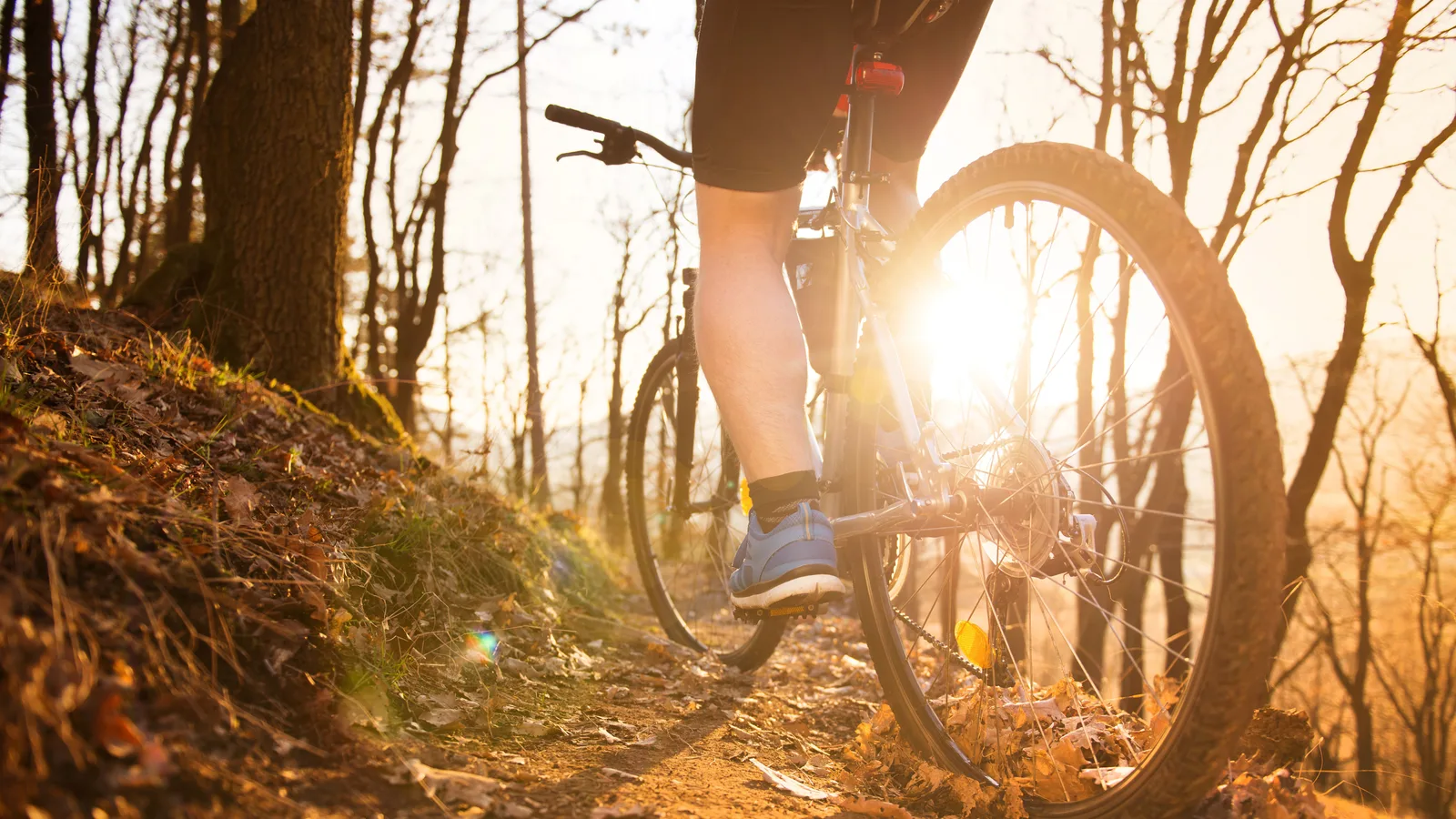
Best mountain bikes: five picks for UK trails
Hardtails, trail bikes and budget full-suspension: five mountain bikes worth buying in the UK, compared by use, terrain and budget.
The best mountain bikes at a glance
Mountain biking in Britain usually means one of three things: muddy bridleways and forest tracks near home, a trail centre with groomed blues and reds, or a trip to Wales or Scotland where the descents turn rocky and steep. The five bikes below cover those jobs, from a budget hardtail you can commute on and thrash at the weekend to a full-suspension trail bike built for long days out.
The quick answer: if you want one bike for everything and you're not sure yet, buy the Trek Marlin 7 Gen 3. If your weekends are spent at trail centres, the Giant Fathom 2 is the hardtail to have. Tight budget? The Voodoo Bizango Pro. Already decided you want rear suspension — the Boardman MTR 8.6 for value, the Trek Fuel EX 5 Gen 6 if you'd rather buy once and upgrade later.
| What to compare | Trek Marlin 7 Gen 3 | Voodoo Bizango Pro | Giant Fathom 2 |
|---|---|---|---|
| Best for | A first real mountain bike for mixed riding | Riders on the tightest budget | Trail-centre reds and progressing riders |
| Frame | Aluminium hardtail | Aluminium hardtail | Aluminium hardtail |
| Wheels | 29in on larger frames, smaller wheels on the smallest sizes | 29in | 29in |
| Typical use | Commuting, towpaths, forest tracks, blue trails | Light trail riding and easy bridleways | Trail centres, natural bridleways, longer rides |
| Where to buy | Trek dealers and Trek's own site | Halfords | Giant dealers |
| Budget position | Entry to mid | Entry | Mid |
| What to compare | Boardman MTR 8.6 | Trek Fuel EX 5 Gen 6 |
|---|---|---|
| Best for | A first full-suspension bike on a budget | All-day trail riding on rougher ground |
| Frame | Aluminium full suspension | Aluminium full suspension |
| Where to buy | Halfords | Trek dealers and Trek's own site |
| Who it suits | Riders stepping up from a hardtail | Riders who want a frame worth upgrading |
| Budget position | Value end of full suspension | Premium end of this shortlist |
Best overall: Trek Marlin 7 Gen 3
Best all-round first mountain bike
Trek Marlin 7 Gen 3
4.5The Marlin is where most British riders should start. It's an aluminium hardtail with a suspension fork, hydraulic disc brakes and a proper spread of gears — enough for towpaths, forest tracks and a full day at a trail centre, without the weight or the servicing of rear suspension. Trek's sizing is the useful part: the smallest frame sizes use smaller wheels, so shorter riders don't end up wrestling a bike that feels like a barge. It's also the model here with the widest dealer support, which makes warranty work and servicing painless. The trade-off is that it's a jack of all trades: the fork and brakes are built to a price, and riders heading straight for rocky reds will want more travel.
What it does well
- Covers commuting, forest tracks and blue/red trails
- Smaller wheels on the smallest frame sizes suit shorter riders
- Wide dealer network for servicing and warranty
- Solid platform to upgrade as you improve
Where it falls short
- Fork and brakes are the first things you'll want to change
- Not the bike for steep, rocky descents
Best budget hardtail: Voodoo Bizango Pro
Best budget hardtail
Voodoo Bizango Pro
4.0Halfords' Voodoo range has long been the default answer for riders who want a genuinely trail-capable hardtail without spending much, and the Bizango Pro sits at the top of it. You get an aluminium frame, 29in wheels and geometry that's closer to a trail bike than the bargain-bin mountain bikes you'll find in the same shop. It's the pick for anyone testing whether they'll actually use a mountain bike before committing serious money.
The caveat is the shop, not the bike. Builds are done in store, so check the brakes, the gear indexing and that the stem and seatpost bolts are properly tightened before you ride away — or ask them to run through it with you. It's also heavier than the pricier hardtails here, and you'll feel that on long climbs.
What it does well
- Trail-ready geometry at a budget price point
- 29in wheels roll well on UK tracks and bridleways
- Easy to buy on the high street, with somewhere to take it back to
Where it falls short
- In-store build quality varies, so check it over before riding
- Heavier than the pricier hardtails here
- Components will need upgrading as you progress
Best hardtail for trail centres: Giant Fathom 2
Best hardtail for trail centres
Giant Fathom 2
4.5The Fathom is Giant's aluminium hardtail for riders who've outgrown an entry-level bike. Longer and slacker than a cross-country racer, with 29in wheels and a stiff frame, it's the one to choose if most of your riding happens at a trail centre and you want to keep things simple. You get the composure of a trail bike without a rear shock to service or pivots to replace.
It climbs well, carries speed through berms and feels far less nervous than a bargain hardtail when the trail starts pointing down. Many builds come with a dropper post — check the spec of the model year you're buying, because kit does change between seasons. The honest limit is that a hardtail still gets bounced off line on steep, rocky descents where a full-suspension bike just tracks the ground.
What it does well
- Trail-friendly geometry without rear-suspension upkeep
- 29in wheels and a stiff aluminium frame
- Big brand with a wide dealer network for parts and servicing
Where it falls short
- Hardtails lose composure on steep, rocky descents
- Spec varies by model year, so check before you buy
Best value full suspension: Boardman MTR 8.6
Best value full suspension
Boardman MTR 8.6
4.0Boardman's MTR is the most straightforward route into a full-suspension trail bike in Britain. It's sold through Halfords, so you can sit on one before you commit, and it's built around an aluminium frame with a rear shock and trail-oriented geometry. If your local riding is rooty, rocky and steep enough that a hardtail keeps getting knocked off line, rear suspension is worth the extra weight and the extra servicing.
Treat it as a starting point rather than a finished bike. The fork and shock are basic, so they're the parts you'll notice first when you improve, and a rear shock adds a servicing item a hardtail simply doesn't have. As with any shop-built bike, give it a check-over — or ask for one — before the first proper ride.
What it does well
- The cheapest sensible way into rear suspension
- Trail geometry that suits UK trail centres and natural tracks
- Aluminium frame that takes upgrades without feeling wasted
Where it falls short
- Basic fork and shock are the weak points
- Rear suspension means more weight and more servicing
- Shop build quality varies, so check it over
Best full suspension for bigger budgets: Trek Fuel EX 5 Gen 6
Best full suspension for bigger budgets
Trek Fuel EX 5 Gen 6
4.5The Fuel EX is Trek's do-everything trail platform, and the 5 is the entry point to it. It's the bike to choose if you've already decided full suspension is where you're heading and you'd rather buy once. The frame is shared with much more expensive builds, so upgrading the fork, wheels or brakes later makes genuine sense rather than polishing a dead end.
What you sacrifice at this level is weight and component quality — the 5 carries the heavier, more basic kit, and you feel it on long fire-road climbs. What you gain over the Boardman is a platform that will still be worth improving in three or four years, plus Trek's dealer network when something needs sorting. If the budget stretches, this is the full-suspension bike we'd point most riders at.
What it does well
- Frame platform shared with far pricier Fuel EX builds
- Confident trail geometry for UK terrain
- Strong dealer support and healthy resale
Where it falls short
- Component spec is basic for the money
- Heavier than the higher-tier builds of the same bike
Hardtail or full suspension?
Most British mountain biking — towpaths, forest tracks, blue and red trail-centre loops — doesn't need a rear shock. A hardtail is lighter, cheaper to buy, cheaper to run and teaches you to read the trail and pick lines, because you can't rely on suspension to smooth everything out.
Full suspension earns its keep when the ground gets genuinely rough: rocky descents in Wales and Scotland, rooty woods in the wet, and long days where fatigue in your legs and back decides how much fun you have. The cost is weight, a shock to service and pivot bearings to replace. If you ride twice a month on groomed trails, put the money into a better hardtail. If you ride weekly and your local trails are rocky, go full suspension.
Why a hardtail still makes sense
- Lighter, so it climbs and accelerates more easily
- No rear shock or pivot bearings to service
- More bike for the money at any given budget
- Fewer things to go wrong on a cold, wet ride
What you give up
- Less grip and comfort on rocky, rooty descents
- More effort needed to stay fast over rough ground
- Harder on the body over long days out
How to choose a mountain bike: what actually matters
Work through these in order — the first two decide whether you'll enjoy the bike, the rest decide how long you'll keep it.
- Fit comes first. Start with the maker's height chart, then check reach and standover. If you're between sizes, a shorter stem and wider bars are easy to sort later; a frame that's too long isn't.
- Then suspension. An air fork with adjustable rebound is worth more than a bigger travel number on British trails. On full-suspension bikes, check the shock has a lockout or a climb setting.
- Then brakes and gears. Hydraulic disc brakes are non-negotiable in UK mud. A single front chainring with a wide cassette is simpler and less likely to drop the chain.
- Then wheels and tyres. Tubeless-ready rims save you pinch flats, and a grippy front tyre transforms wet-root grip for very little money.
- Then the frame's upgrade potential. Tapered head tube, Boost hub spacing and routing for a dropper post are the things that are expensive or impossible to add later.
- Frame and geometry
- 5.0/5
The one thing you can't change later — long, slack trail geometry is what makes a bike feel stable.
- Suspension quality
- 4.5/5
A decent air fork with adjustable rebound matters more than a big travel figure on UK trails.
- Brakes
- 4.0/5
Hydraulic discs are essential in mud; bigger rotors help if you're heavy or ride steep ground.
- Wheels and tyres
- 4.0/5
Tubeless-ready rims and a soft-compound front tyre give the biggest grip gain per pound spent.
- Upgrade path
- 3.5/5
Tapered head tube, Boost spacing and dropper routing keep a cheap frame worth improving.
- Running costs
- 3.0/5
Rear suspension adds shock and pivot servicing; a hardtail is far cheaper to keep going.
- Wheel sizes
- 29in rolls fastest, 27.5in turns quicker; some bikes mix 29in front with 27.5in rear.
- Travel
- Cross-country roughly 100–120mm, trail 130–150mm, enduro 160mm and up.
- Hardtail
- Front suspension only — lighter, cheaper, less to service.
- Full suspension
- Front fork plus rear shock — more grip and comfort, more weight and servicing.
- Dropper post
- A handlebar lever drops the saddle out of the way for descents.
- Boost spacing
- The wider hub standard (148mm rear) — check for it if you plan to upgrade wheels.
- Tubeless
- Sealant instead of inner tubes: fewer pinch flats and lower pressures for grip.
The verdict
Mountain bike buying questions
Do I need full suspension for UK trail centres?
No. Blue trails and most reds are perfectly rideable on a hardtail with a decent air fork and grippy tyres. Rear suspension starts to earn its money on rocky, rooty descents, long days out and anything graded black.
How do I pick the right frame size?
Start with the manufacturer's height chart, then check reach and standover. If you're between sizes, a shorter stem and wider bars are easy to change later — a frame that's too long is not.
Are 29in wheels better than 27.5in?
They roll over roots and rocks more easily and hold speed better, which is why most trail bikes use them. 27.5in is more manoeuvrable and often appears on the smallest frame sizes. Neither is a downgrade.
Can I upgrade a cheaper mountain bike later?
Usually, but the frame has to allow it. Look for a tapered head tube, Boost hub spacing and routing for a dropper post before you buy, because those are the changes that are costly or impossible afterwards.
Is a dropper post worth fitting?
Yes if you ride anything steep. Dropping the saddle lets you move your weight back and down, which is the single biggest handling gain most riders get from an upgrade.
Related articles
 Best bike helmets: 5 picks for road, commuting and valueShortlists
 The best bike phone mounts for road and gravel ridersShortlists
 Best Bike Pumps: 5 Picks for Home, Road and TrailShortlists
 Best bike shorts: five picks for comfort on every rideShortlists
 Best BMX Bikes for Street, Park and BeginnersShortlists
 Best foldable electric bikes for UK commutersShortlists
 Best gravel bikes: five picks for UK lanes and club runsShortlists
 Best mountain bike helmets: 5 picks for UK trail ridersShortlists