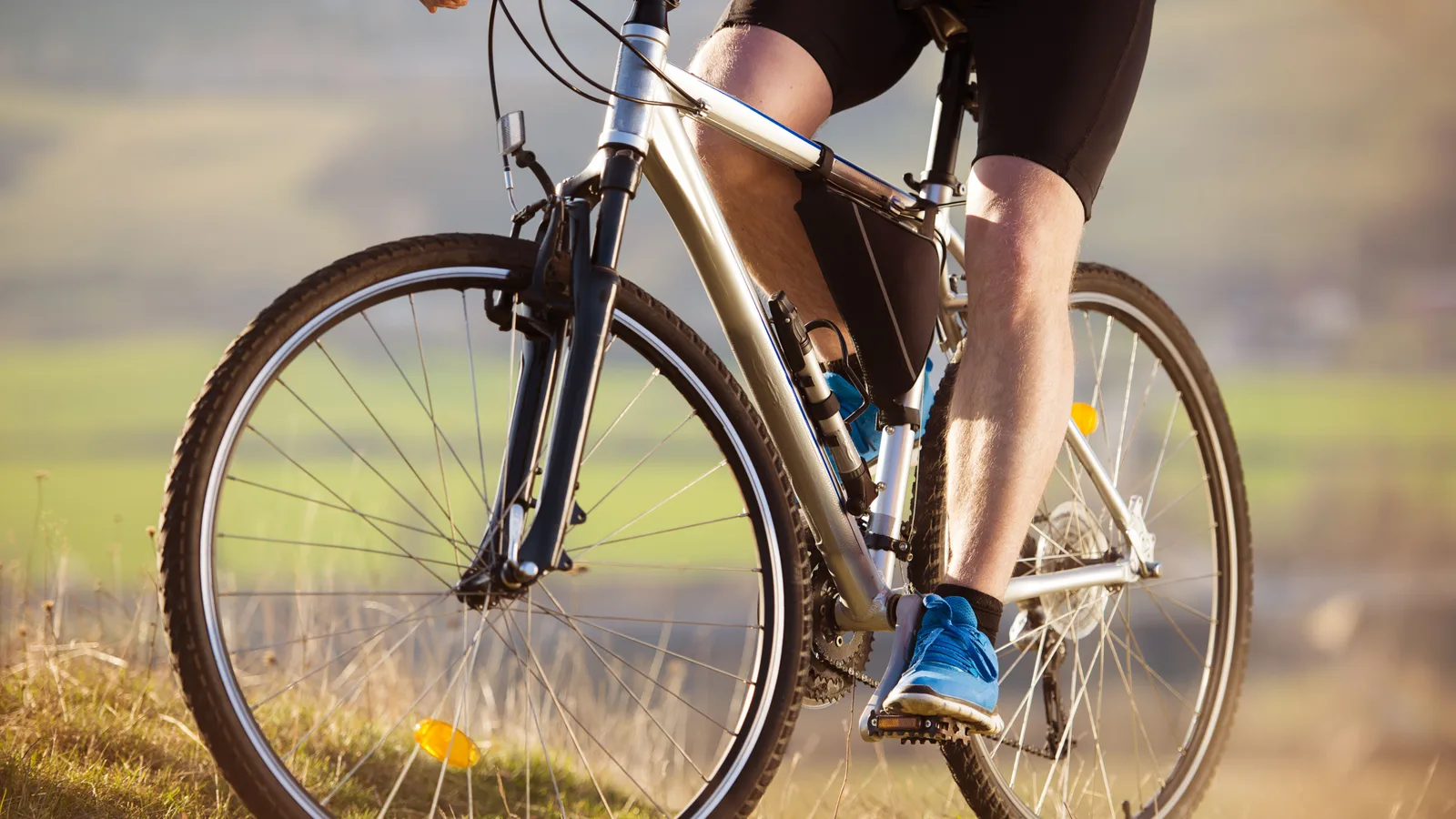
Best Bike Pumps: 5 Picks for Home, Road and Trail
We compare the best bike pumps for British riders — floor pumps, mini pumps and a cordless electric option — so you buy the right one once.
Which bike pump should you buy?
Most people searching for a bike pump need one thing: a floor pump that lives by the back door, fills a tyre in a few strokes and has a gauge you can actually read from standing height. That is the short answer, and our pick for most riders is the Topeak JoeBlow Sport III — quick, compatible with both common valve types and unfussy at 90 psi.
The rest of the list covers the jobs a floor pump cannot do. If you want one pump that travels with you, the Lezyne Micro Floor Drive HV suits gravel and mountain bike tyres and the Topeak Road Morph G is built for narrow road rubber. The SKS Rennkompressor is for the rider who would rather buy once and rebuild than replace, and the Bosch EasyPump is the cordless answer for a household where several bikes need topping up on a Sunday morning.
How the five picks compare
Headline pressure ratings flatter pumps. What separates these five is how they behave at the pressures you actually run — broadly 70–100 psi on a road bike, 30–45 psi on gravel and 20–30 psi with a mountain bike, depending on rider weight, tyre width and whether you are tubeless — plus whether the head and hose let you work at a comfortable angle rather than crouched over the valve.
| Pump | Best for | Type | Max pressure | Valve fit |
|---|---|---|---|---|
| Topeak JoeBlow Sport III | Weekly checks on road and gravel bikes | Floor pump | 160 psi (11 bar) | Presta and Schrader |
| SKS Rennkompressor | Riders who want one pump for decades | Floor pump | 16 bar (232 psi) | Presta and Schrader |
| Lezyne Micro Floor Drive HV | Gravel and MTB rides where you carry your own air | Mini floor pump | Volume-focused HV model; an HP version exists for road | Presta and Schrader |
| Topeak Road Morph G | Roadside repairs on narrow road tyres | Mini pump with footpeg | 160 psi (11 bar) | Presta and Schrader |
| Bosch EasyPump | Households with several bikes at home | Cordless electric | 10.3 bar (150 psi) | Presta and Schrader |
The five best bike pumps in detail
Best floor pump overall
Topeak JoeBlow Sport III
4.8The pump most club riders end up buying, and with good reason. Steel barrel, wide base, a big analogue gauge at the bottom and Topeak's TwinHead, which takes Presta and Schrader without hunting for an adapter in a drawer. The hose is long enough that you can stand upright with the head on a valve, and the handle is broad enough to push with both hands at 100 psi. The 160 psi rating is more than any bicycle tyre needs, which means it never feels strained. This is the pump to leave by the shed door and use every week.
What we like
- Big, easy-to-read gauge on a stable steel base
- Head fits Presta and Schrader with no adapters to lose
- Long hose and wide handle make 100 psi comfortable
- Rated to 160 psi, so high-pressure road tyres are no trouble
What to weigh up
- Heavy and workshop-bound — it will not go in a jersey pocket
- Head seals are a consumable, so expect to service it eventually
Best buy-it-for-life track pump
SKS Rennkompressor
4.6A German design that has barely changed in decades, which is exactly the point. Metal barrel, metal base, a proper handle and a 16 bar (232 psi) rating far beyond anything a bicycle needs. What sells it is the spares: SKS supplies replacement seals, hoses and valve heads, so a worn pump can be rebuilt rather than binned. It is heavier and dearer than the Topeak, the gauge sits low and the styling is unapologetically old-school — but for a club workshop or a rider who keeps the same pump for twenty years, it is the sensible spend.
What we like
- Metal barrel, base and rod — it feels like a tool, not a toy
- Rated to 16 bar (232 psi), with headroom to spare
- Seals, hoses and heads are sold as spares, so it can be rebuilt
- The sort of kit that gets passed on rather than thrown out
What to weigh up
- Heavier and pricier than most plastic-bodied track pumps
- Base-mounted gauge means crouching to read it
Best pump to carry on gravel and MTB rides
Lezyne Micro Floor Drive HV
4.5A mini pump that borrows the good bits of a floor pump: an integrated hose so you are not wrestling the head against the rim, and a body you can brace on the ground while you push. The HV (high volume) version is tuned for bigger gravel and mountain bike tyres, where the aim is to shift air quickly at lower pressures rather than sprint to 120 psi. Machined aluminium body, Presta and Schrader compatible, and long enough that it lives in a frame bag or on a mount rather than a jersey pocket.
What we like
- High-volume version moves a lot of air per stroke for gravel and MTB tyres
- Integrated hose keeps the head clear of rims and spokes
- Machined aluminium body shrugs off being carried all year
- Works with Presta and Schrader valves
What to weigh up
- Bulkier and heavier than a pocket pump
- Will not get a road tyre to high pressure as briskly as the HP version
Best mini pump for road riders
Topeak Road Morph G
4.4The Morph's trick is a fold-out footpeg and a short hose, letting you pump the way you would with a track pump instead of hanging off the valve with cold hands. The G version adds an inline analogue gauge, so a roadside tube goes back to a rideable pressure rather than a guessed one. Rated to 160 psi, which covers 25–32 mm road tyres comfortably, and light enough to live on the frame. It is a slow way to fill a fat gravel tyre, and the gauge is small.
What we like
- Footpeg and hose turn a mini pump into a two-handed job
- Inline gauge takes the guesswork out of roadside repairs
- Rated to 160 psi for narrow road tyres
- Light enough to carry on the frame or in a bag
What to weigh up
- Small gauge is hard to read in poor light
- High-volume tyres take a long time to fill
Best cordless electric pump
Bosch EasyPump
4.3If the household has four bikes and one of them is a child's, this is the pump that actually gets used. Set the target pressure on the digital display, push it onto the valve and it stops when it gets there — no bending, no squinting at a base gauge, no over-inflating. It reaches 10.3 bar (150 psi), so road tyres are fine, and it takes Presta and Schrader. The trade-offs are charging, a higher price than a very good track pump, and the fact that a flat battery is no help at the roadside.
What we like
- Set a pressure and it stops there — ideal for several bikes
- Digital display is far easier to read than a base-mounted gauge
- 10.3 bar (150 psi) covers road, gravel and mountain bike tyres
- No bending or wrestling with a stiff hose
What to weigh up
- Needs charging, and a flat battery is useless mid-ride
- Costs more than an excellent track pump
- Heavier than a hand pump, so it stays at home
Floor pump, mini pump or electric: pick the right type
Pumps are not interchangeable, and most disappointment comes from buying the wrong category rather than the wrong brand. Work out where the pump will live before you look at specs.
- Floor pump (track pump)
- Stays at home. Fast, has a gauge, and gets a road tyre to pressure in a handful of strokes.
- Mini floor pump
- Hose and footpeg in a packable body — the best compromise if you carry one pump for everything.
- Hand pump
- Smallest and lightest. Slow at high pressure, fine as a get-you-home tool.
- CO2 inflator
- Single-shot inflation from a cartridge. Very fast, but a cartridge is spent after one tyre.
- Cordless electric
- Set a pressure and let it run. Best for several bikes, worst for weight and battery dependence.
How to choose a bike pump
- Valve head and hose
- 5.0/5
The head is the part that fails first. Presta/Schrader compatibility and a hose long enough to work at an angle matter more than barrel material.
- Gauge and repeatability
- 5.0/5
A readable gauge means you run the same pressure every week instead of guessing — the single biggest upgrade over a cheap pump.
- Pressure headroom
- 4.5/5
You need far less than the headline figure, but a pump rated well above your tyre pressure works less hard and lasts longer.
- Build and spares
- 4.0/5
Metal bodies and replaceable seals turn a pump into a ten-year purchase rather than a three-year one.
- Weight and packability
- 3.0/5
Only matters for the pump you carry. A home pump can be as heavy as it likes.
- Check the valve head before anything else. Most modern heads handle Presta and Schrader, sometimes by reversing a rubber insert. If your household includes an older town bike with Dunlop valves, confirm the head copes before you buy.
- Do not chase pressure ratings. A 160 psi pump is not better than a 120 psi pump for a 40 mm gravel tyre; it is just built for a different job. Volume matters more than headroom on wide tyres.
- Look at the hose, not the barrel. A long, flexible hose lets you stand upright and pull the head off straight. Short, stiff hoses are how valve cores get torn.
- Ask whether spares exist. Seals, hoses and heads wear out. A pump with available spares is cheaper over a decade than two sealed ones.
- Think about tubeless. Routine top-ups are fine with any track pump, but seating a new tubeless bead needs a sudden rush of air that a mini pump cannot supply.
Getting the most out of your pump
- Undo the Presta valve nut fully, then push the head on square and straight.
- Pull the head off straight rather than levering it sideways — most bent valve cores happen on removal, not inflation.
- Stand over the pump with straight arms and use your upper body, not just your wrists.
- Check your gauge against a known-good one occasionally; base-mounted analogue gauges drift with age.
- Keep the hose off grit and give the head a wipe now and then. Grit in the rubber seal is what kills the fit.
Our verdict
Bike pump questions, answered
Do I really need a pump with a gauge?
It is the difference between guessing and repeating. A readable gauge lets you set the same pressure every week; if your pump's gauge is poor, a separate digital pressure gauge costs little and settles the argument.
Will any pump fit both Presta and Schrader valves?
Most modern heads do, either as a dual head or by unscrewing and reversing the rubber insert. Cheap pumps often list only one type, so check before buying — especially if you also run an older bike with Dunlop valves.
Can a track pump seat a tubeless tyre?
For routine top-ups, yes. Seating a fresh tubeless bead usually needs a sudden rush of air that a track pump cannot deliver; a dedicated tubeless inflator or a workshop compressor does that job.
How often should I check my tyre pressure?
Before any ride you care about, and at least weekly. Tyres lose pressure slowly even when unused, and a few psi makes a noticeable difference to grip and comfort.
Is a CO2 inflator a replacement for a pump?
Only for emergencies. Cartridges are single-use and CO2 escapes through butyl tubes faster than air, and some tubeless sealant makers advise against routine CO2 use. Carry one as a backup, not as the whole plan.
Related articles
 Best bike helmets: 5 picks for road, commuting and valueShortlists
 The best bike phone mounts for road and gravel ridersShortlists
 Best bike shorts: five picks for comfort on every rideShortlists
 Best BMX Bikes for Street, Park and BeginnersShortlists
 Best foldable electric bikes for UK commutersShortlists
 Best gravel bikes: five picks for UK lanes and club runsShortlists
 Best mountain bike helmets: 5 picks for UK trail ridersShortlists
 Best road bikes: 5 picks for UK ridersShortlists