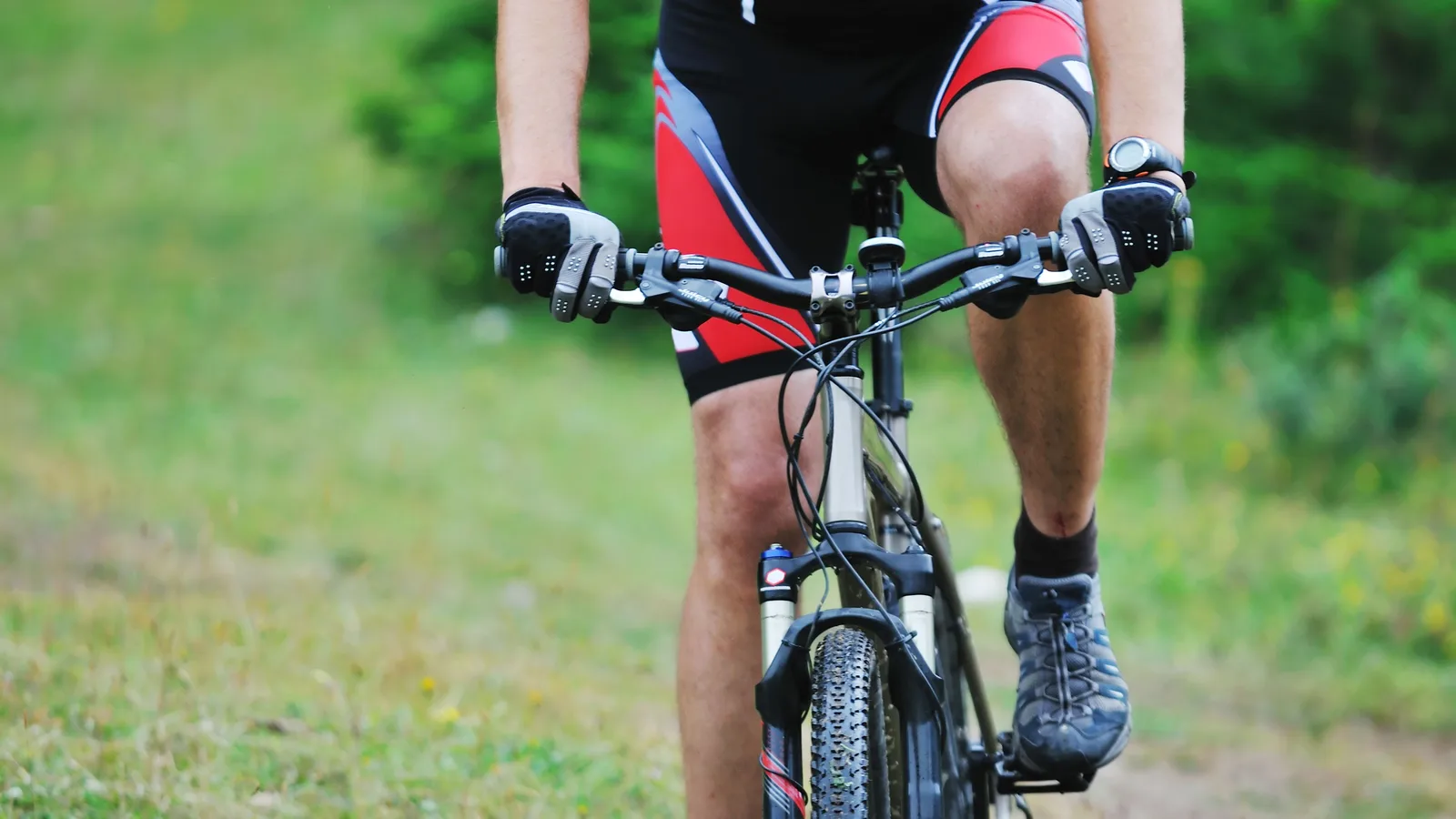
Best mountain bike grips for UK trail and enduro riders
Five of the best mountain bike grips for UK trail, enduro and XC riders, compared on shape, compound, security on the bar and wet-weather grip.
Best mountain bike grips: the quick answer
Grips are the cheapest contact point on a mountain bike and the part most riders leave unchanged for years. That is a false economy. Worn grips cost you control on rough ground, and the wrong shape puts pressure exactly where your hands complain after two hours in the saddle.
This shortlist sticks to grips that are easy to find in UK shops, fit standard mountain bike bars and suit the riding most people actually do: trail centres, natural bridleways, the occasional enduro and a lot of mud.
- Best overall: Ergon GE1 Evo — a shaped grip that supports the outside of the hand.
- Best all-round lock-on: ODI Elite Flow — round, tough and quick to swap.
- Best for wet, muddy riding: Renthal Traction Lock-On — soft rubber, raised tread.
- Best for comfort: ESI Grips Chunky — silicone, with no hard core under the palm.
- Best value: DMR DeathGrip — a huge choice of thickness and compound for very little money.
The five best mountain bike grips
Best overall for trail and enduro
Ergon GE1 Evo
4.7The GE1 is the grip most often suggested to riders whose hands ache or go numb on long descents, and it is the one we would fit to a trail or enduro bike first. The profile is tapered, with more volume sitting under the outside of the hand, and the surface is broken into textured zones instead of one uniform pattern.
It is a lock-on grip, so it fits and comes off with an Allen key and will not shift in the wet. The collars also let you rotate the grip on the bar to line the shape up with your wrist angle — worth a couple of rides of small adjustments. Ergon sells it in a standard and a slimmer version, which covers smaller hands.
What we like
- Tapered shape supports the outside of the hand on long descents
- Lock-on collars make fitting and rotation easy
- Two diameters cover most hand sizes
- Hard-wearing surface that does not go slick quickly
What to weigh up
- More expensive than a basic push-on grip
- The shaped profile divides opinion — some riders never settle into it
- Overkill for gentle towpath riding
Best all-round lock-on grip
ODI Elite Flow
4.4ODI's lock-on system is the benchmark other clamp-on grips are judged against, and the Elite Flow is the version most trail riders end up with. The diameter is mid-sized, the pattern is shallow rather than knobbly, and the shape stays round in the hand, which suits riders who do not want to think about their grips.
Because it clamps on, it swaps between bikes in a couple of minutes with one Allen key, and the colour range means you can match a build without hunting around. The compound is on the firm side, so it lasts well and stays predictable in the wet, but it passes more trail buzz through than a soft or silicone grip.
What we like
- Proven lock-on fitting that stays put in the wet
- Round, mid-size profile that suits most hands
- Firm compound wears slowly
- Easy to move between bikes
What to weigh up
- Firmer feel than soft or silicone grips on rough ground
- Shallow pattern offers less bite in deep mud
- Costs more than a basic push-on
Best for wet and muddy riding
Renthal Traction Lock-On
4.3Renthal's Traction grip is built around a soft, tacky compound and a raised, angled tread that gives mud and water somewhere to go. That is why it turns up on so many winter bikes in the UK, where the ground is wet far more often than it is dry.
The trade-off is wear. A compound this soft feels superb when new and goes off sooner than a firm rubber grip, so if you ride four or five times a week you will be buying replacements more often. The lock-on fitting is straightforward and the grip stays anchored on the bar.
What we like
- Soft, tacky compound that works in cold, wet weather
- Raised pattern clears mud rather than smearing it
- Lock-on fitting stays secure
- Popular enough to be easy to find in shops
What to weigh up
- Soft rubber wears faster than firmer compounds
- Can feel vague through thick winter gloves
- Less appealing if you want one pair to last several seasons
Best for comfort on rough ground
ESI Grips Chunky
4.2ESI grips are silicone, with no plastic core and no clamp. The Chunky is the thicker of the main sizes, and silicone absorbs vibration noticeably better than rubber of the same thickness — the difference shows up on long, broken surfaces and on hardtails with stiff forks.
There is also nothing hard under your palm, which helps if you get pressure points from a lock-on collar. The catch is fitting: they are push-on grips that need isopropyl alcohol to slide on and a few hours to set, and if you rush it they will rotate on the bar. The soft ends can also tear in a crash.
What we like
- Excellent vibration damping for the weight
- No hard core or collar under the palm
- Very light
- Comfortable with or without gloves
What to weigh up
- Fiddly to fit and needs time to set
- Can rotate or tear if fitted badly
- Not the choice if you swap grips between bikes often
Best value all-rounder
DMR DeathGrip
4.5The classic DeathGrip is a push-on grip with a waffle pattern, sold in thin and thick versions, several compounds and with or without a flange. That spread of options is the point: you can buy a soft, thin pair for dry summer trails and a firmer, thicker pair for winter without changing brand.
It is also cheap enough to replace every season, which matters because grips are a consumable. The waffle pattern holds well in the wet with or without gloves. Being push-on, it needs hairspray or compressed air to fit and a night to dry; fit it wet and it will twist on the bar under a hard pull.
What we like
- Wide choice of thickness, compound and flange
- Strong wet-weather grip from the waffle pattern
- Cheap enough to replace each season
- Widely stocked in UK shops
What to weigh up
- Push-on fitting takes longer than a lock-on
- Soft compounds wear quickly
- Can twist if fitted with too much lubricant
How the picks compare
| What you are comparing | Ergon GE1 Evo | ODI Elite Flow | Renthal Traction | ESI Chunky |
|---|---|---|---|---|
| Fitting | Lock-on collar | Lock-on collar | Lock-on collar | Push-on, no clamp |
| Profile | Tapered, more volume under the outer hand | Round, medium diameter | Round with raised angled blocks | Round, thick silicone sleeve |
| Feel | Firm, with textured zones | Firm and hard-wearing | Soft and tacky | Squishy, high damping |
| Best for | Trail and enduro | All-round trail riding | Wet and muddy conditions | Long, rough days |
| Main drawback | Shape is not to everyone's taste | Less cushioning than softer grips | Wears faster than firm rubber | Fiddly to fit |
The DMR DeathGrip is left out of the table only because it exists in so many combinations of thickness, compound and flange that a single column would misrepresent it. Treat it as the value option that can be configured to suit — and the one to pick if you like to change grips with the seasons rather than keep a pair for years.
What matters when you choose
Start with your hands, not the bike. Grip diameter is the most common mismatch. Riders with smaller hands often find a thick grip forces the fingers open, which is uncomfortable and costs control, while riders with large hands or a habit of riding without gloves usually prefer more volume. If you are between sizes, go thinner.
Decide lock-on or push-on. Lock-on grips clamp to the bar and can be swapped with one Allen key; push-on grips rely on friction and a snug fit. Push-ons have no hard core under the palm and cost less, but they take longer to fit and can move if fitted badly.
Match the compound to the weather. Soft, tacky rubber is brilliant in the wet and cold and wears out quickly. Firmer compounds last longer and give less damping. In the UK, most riders are best served by something in the middle, plus a softer pair for winter.
Think about shape and pattern. A round grip with a shallow pattern suits most riders most of the time. A shaped or ergonomic grip can transform comfort if you get pressure points or numb fingers, but it is a personal fit rather than a guaranteed upgrade.
Check the length. Grip length has to leave room for your shifter and dropper lever. Measure your current grips before ordering, and remember that a lock-on collar adds a few millimetres at each end.
- Diameter and hand size
- 5.0/5
The single most common reason a grip feels wrong. Get this right before you worry about pattern or colour.
- Security on the bar
- 5.0/5
A grip that rotates on a wet descent is dangerous. Lock-on collars remove the doubt; push-ons rely on a careful fit.
- Wet-weather grip
- 4.5/5
UK trails are wet for much of the year, so a compound that stays tacky in the cold matters more than looks.
- Vibration damping
- 4.0/5
Worth more on hardtails and alloy bars; silicone and soft compounds take the edge off rough ground.
- Durability
- 3.5/5
Soft, tacky compounds feel best when new and wear fastest. Budget for replacing grips more often if you ride a lot.
- Ease of fitting
- 3.0/5
Lock-ons are a two-minute job. Push-ons need air, alcohol or hairspray and a night to set.
Fitting and setup
Clean the grip area of the bar with isopropyl alcohol and check for burrs or old residue, especially if you are replacing a push-on grip that was hairsprayed on.
For lock-on grips, slide the grip on, set the rotation, then tighten the collar bolts evenly to the torque printed on the collar. If nothing is printed, snug them up with a small torque wrench rather than leaning on an Allen key.
For push-on grips, use isopropyl alcohol or hairspray inside the grip, push it on quickly and fully, and leave the bike overnight. Never use grease or oil — the grip will never stay put.
Once everything is fitted, sit on the bike and check your wrists. If your brake levers sit high, your hands roll forward and no grip will fix the ache.
The verdict
Mountain bike grips: common questions
Will these grips fit my bike?
All five are made for the standard 22.2 mm grip area found on nearly every mountain bike bar. Lock-on grips come with their own collars sized for that diameter. If you are unsure, measure your bar with a caliper before ordering.
Are lock-on grips better than push-on grips?
Not better, just easier. Lock-ons fit and come off with an Allen key, stay put when wet and can be moved between bikes. Push-ons have no hard core under the hand and cost less, but they need air, alcohol or hairspray to fit and a night to dry.
How do I stop a grip twisting on the bar?
For lock-ons, clean the bar and tighten the collar to the torque marked on it. For push-ons, clean the bar with isopropyl alcohol, use the same alcohol or hairspray as a lubricant, slide the grip on quickly and fully, and leave it overnight. Never use grease or oil.
Do thicker grips help sore hands?
Sometimes, but thickness is only one factor. If your hands go numb rather than ache, a slimmer grip often helps because you can close your hand properly. If they ache from vibration, a softer or silicone grip and a re-check of your brake lever angle will do more.
How often should mountain bike grips be replaced?
When the pattern has worn smooth, when the rubber has gone hard and shiny, or when a grip moves on the bar. Soft and tacky compounds wear quickest, so a rider doing plenty of winter miles may go through a set a year.
Related articles
 Best bike helmets: 5 picks for road, commuting and valueShortlists
 The best bike phone mounts for road and gravel ridersShortlists
 Best Bike Pumps: 5 Picks for Home, Road and TrailShortlists
 Best bike shorts: five picks for comfort on every rideShortlists
 Best BMX Bikes for Street, Park and BeginnersShortlists
 Best foldable electric bikes for UK commutersShortlists
 Best gravel bikes: five picks for UK lanes and club runsShortlists
 Best mountain bike helmets: 5 picks for UK trail ridersShortlists