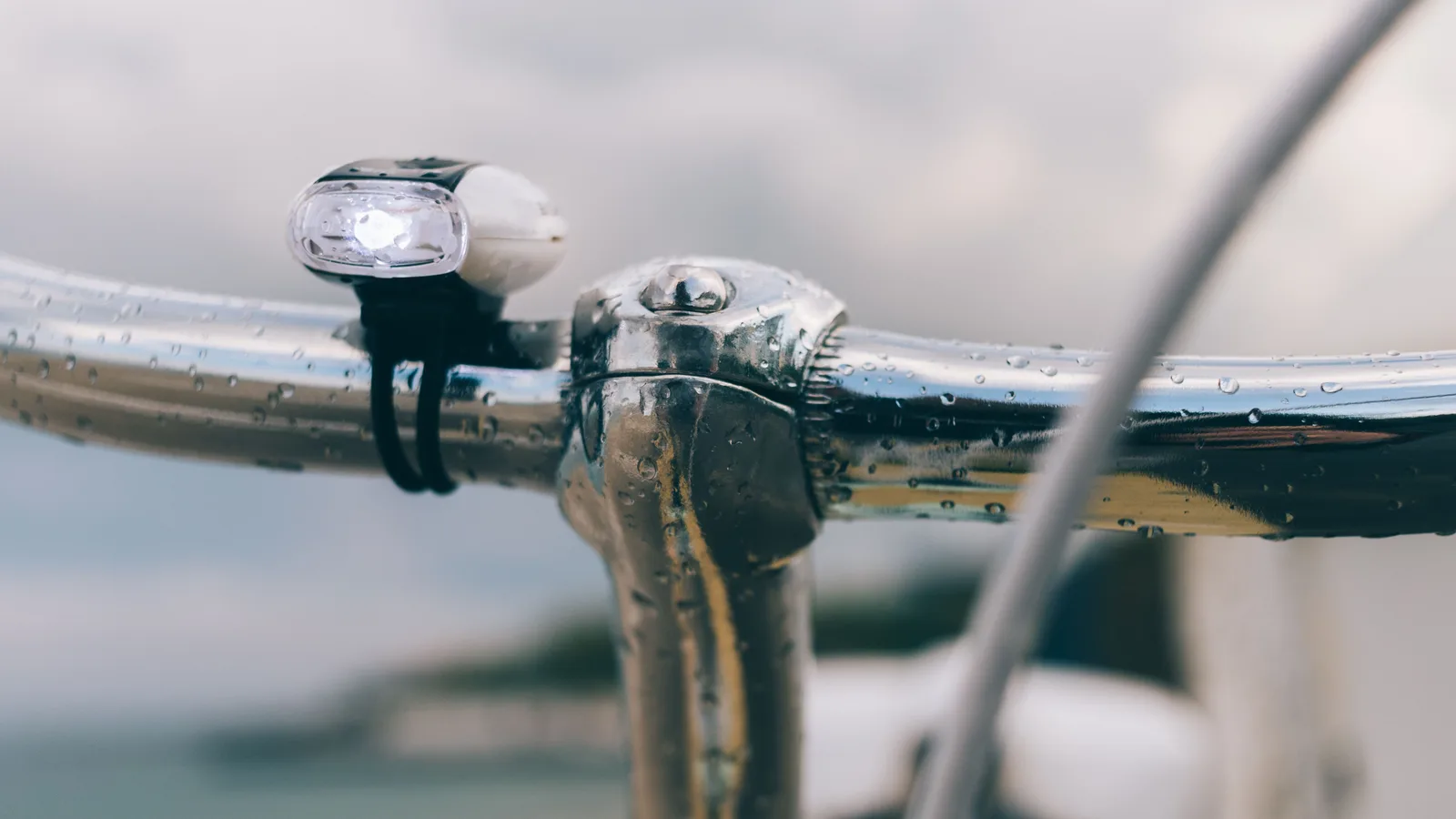
Best bike lights: 5 picks for road, commute and club rides
Our pick of the best bike lights for UK riders, from a road-shaped front light for unlit lanes to a rear radar light for busy A-roads.
Best bike lights at a glance
A bike light has to do one of two jobs, and often both. It has to let you see — throw a usable pool of light far enough down an unlit lane that you can spot a pothole, gravel or a badger before you hit it — and it has to let you be seen, from the side at junctions and from behind on a fast road.
Those two jobs pull in different directions, which is why a single light rarely covers everything. The picks below are split by the job they do best, so you can buy for the riding you actually do rather than the biggest number on the box.
| Light | Where it goes | Best for | What stands out |
|---|---|---|---|
| Exposure Strada MK11 | Front, handlebar | Unlit lanes and fast road riding | Road-shaped beam and UK-made build |
| Lezyne Macro Drive 1300XXL | Front, bar or helmet | Big output without a big spend | Aluminium body and USB-C charging |
| Garmin Varia RTL515 | Rear, seatpost | Busy A-roads and commuting | Radar warns your head unit about traffic behind |
| CatEye AMPP 500 | Front, bar or helmet | Lit-town commuting and backup | Small, light and quick to swap between bikes |
| Knog Blinder | Rear, seatpost or seat stay | Simple be-seen lighting | Tool-free fitting and punchy flash patterns |
Best overall: Exposure Strada MK11
Best overall
Exposure Strada MK11
4.7The Strada is Exposure's road light, and it's the one to buy if your riding regularly takes you onto unlit lanes at speed. The beam is shaped to throw light down the road while keeping the top edge of the spread low, so you can read the surface ahead without flattening every driver coming the other way — the thing cheap high-output lights get wrong. The machined aluminium body feels like a tool rather than an accessory, and because Exposure designs and builds its lights in Hampshire, servicing and spares are straightforward. It is expensive, and on a lit town commute you'd be paying for performance you can't use.
Why we rate it
- Road-shaped beam lights the road ahead without dazzling oncoming traffic
- Machined aluminium body that shrugs off winter road spray
- UK design and build, with spares and servicing based in Hampshire
- Sturdy bracket that keeps the beam steady on rough tarmac
Worth knowing
- One of the most expensive ways to light a bike
- More light than a lit-town commute will ever use
- The road-shaped beam is less useful off-road, where you want a wider spread
Best value front light: Lezyne Macro Drive 1300XXL
Best value front light
Lezyne Macro Drive 1300XXL
4.6This is the light we'd point most riders towards first: a big-output front light in a machined aluminium body, with USB-C charging and enough modes to cover everything from a bright daytime flash to a steady beam for a dark lane. The cut-outs around the lens mean you're visible from side roads and junctions, not just straight ahead — useful when you're crossing a busy junction at dusk. It's heavier than a small commuter light, and the beam is rounder than a road-specific cut-off, so on shared paths and busy lanes dip it or drop to a lower setting.
Why we rate it
- Strong output for the money
- Aluminium body with USB-C charging
- Side visibility cut-outs help at junctions
- Adapters available for helmet or GoPro-style mounting
Worth knowing
- Rounder beam than a road-shaped cut-off, so aim it carefully
- Heavier than a small commuter light
- You'll be charging it more often on the brightest settings
Best rear light: Garmin Varia RTL515
Best rear light
Garmin Varia RTL515
4.5A rear light with a radar built in. Paired with a Garmin Edge — or another head unit that supports ANT+ radar — it shows approaching traffic as a marker on the screen and beeps as a vehicle closes in, so you know what's behind you before you can hear it and before you pull out round a parked car. As a light it's a proper rear unit with a bright, attention-grabbing flash, and it works with the Varia app if you ride without a computer. On start-stop city commuting the alerts come thick and fast, which is exactly when it's least useful.
Why we rate it
- Warns you about traffic behind before you can hear it
- Clean seatpost mount that stays put
- Works with Garmin Edge and other ANT+ radar-compatible computers
- Doubles as a strong rear light with a daytime flash
Worth knowing
- Only earns its keep with a compatible head unit or phone
- Expensive for a rear light
- Constant alerts in heavy stop-start traffic
Best compact front light: CatEye AMPP 500
Best compact front light
CatEye AMPP 500
4.2A small, light front light that disappears on the bars and is light enough to live on a helmet for winter commuting. Five hundred lumens is plenty for lit streets, shared paths and the ride home through town, the bracket swaps between bikes in seconds, and CatEye's build quality means it keeps working after a winter of rain and salt. It isn't a light for unlit lanes at speed — the battery and the beam are simply smaller — but as a second light, a helmet light or the main light for a town commute, it's hard to argue with.
Why we rate it
- Small and light enough for helmet use
- Tool-free bracket makes swapping bikes easy
- Reliable in wet weather
- Cheap enough to keep one on each bike
Worth knowing
- Not enough on its own on unlit lanes
- Smaller battery means more frequent charging
- Basic mount compared with premium brackets
Best simple rear light: Knog Blinder
Best simple rear light
Knog Blinder
4.0A rear light that fits anything: the stretchy integrated strap wraps round a seatpost, seat stay or rack without tools, so it moves between bikes in seconds. The flash patterns are genuinely eye-catching, which is the whole point of a be-seen light, and the sealed body copes with British weather. Battery life on the brightest patterns is the trade-off, and a light this easy to unclip is also easy for someone else to walk off with — so take it with you when you park.
Why we rate it
- Fits any seatpost or seat stay without tools
- Bright, distinctive flash patterns
- Sealed against rain and road spray
- Cheap enough to run two
Worth knowing
- Short run time on the brightest flash modes
- Smaller lens than a dedicated rear light
- Easy to remove, and easy to lose
Bike lights and the law after dark
In Great Britain, riding between sunset and sunrise means you need a white light at the front and a red light at the rear. Flashing lights are legal as long as they flash between 60 and 240 times a minute — roughly one to four flashes a second — so the strobe and pulse modes on modern lights are fine.
The regulations also cover reflectors, and pedal reflectors remain a requirement on bikes first used after 1 October 1985, which is a long-standing irritation for anyone on clipless pedals. None of that changes the practical point: what keeps you safe is being seen early and being able to see the road, not the wording of the statute.
How to choose bike lights
Work backwards from your worst ride rather than your average one. If you commute five miles through lit streets, a compact light and a good rear is plenty. If you're out on club runs that finish on unlit lanes in November, you need a beam that reaches far enough ahead to ride at 20mph-plus, and a runtime that covers the whole ride on the setting you'd actually use — not the eco mode you'd never select.
Then look at the boring stuff, because that's what decides whether a light is still on your bars in February: how it mounts, how it charges, and whether the seals survive road spray. A light that rattles, needs a charging cable you can never find, or fills with water is worse than the one with a slightly smaller number on the box.
- Beam pattern
- 5.0/5
A shaped beam that lights the road without blinding oncoming traffic matters more than raw output.
- Runtime on a usable setting
- 5.0/5
Check the runtime for the mode you'll ride in, not the eco setting quoted in the headline.
- Mounting and swapping bikes
- 4.0/5
Tool-free brackets mean the light actually moves between commuter and winter bike.
- Charging
- 4.0/5
USB-C and a charge port cover that seals properly; a flat battery on the way home is the classic failure.
- Weather sealing
- 4.0/5
British winters test every seal — look for a well-fitting port cover and a body that doesn't fill with water.
- Daytime visibility
- 3.0/5
A flash mode for daylight riding helps you get noticed at junctions and on fast roads.
Mounting, aiming and looking after your lights
- Aim the front light down slightly. Set it roughly level, then drop the nose a couple of degrees so the top of the beam lands on the road ahead rather than in a driver's windscreen. Check it against a wall after dark, then on the road.
- Keep the rear light high and unobstructed. Under the saddle or high on the seatpost is better than tucked behind a saddle bag, and it needs to be visible from both sides.
- Charge little and often. Top up after every couple of winter rides, keep the charge port cover shut, and don't leave a light flat in a drawer for months.
- Carry a backup. A small rear light in a jersey pocket costs little and covers you when the main one dies.
- Take lights with you when you park. Most unclip from their bracket in a second; the bracket can stay on the bike.
The verdict
Bike light questions, answered
How many lumens do I need for unlit country lanes?
There's no magic number, and beam shape matters more than the figure on the box. For pitch-black lanes, look for a front light with a shaped beam and a claimed output in the high hundreds of lumens or more from a brand that publishes honest runtimes — then check the runtime on the mode you'd actually ride in.
Will a rear radar light work with a Wahoo or Hammerhead computer?
Yes, if the unit supports ANT+ radar — Wahoo ELEMNT and Hammerhead Karoo computers can display Varia alerts. Basic GPS units without radar support won't show anything, though the light itself still works as a rear light.
Should I run a helmet light as well as a bar light?
A helmet light lets you look into corners and at drivers waiting at junctions, which is genuinely useful on twisty descents and unlit lanes. Keep it on a lower setting than your bar light and dip it for oncoming traffic — a helmet light aimed at eye level is the quickest way to annoy everyone else on the road.
Do I need to take my lights off when I park the bike?
Take them with you. Nearly all modern lights unclip from their bracket in a second, and a light left on a parked bike in a town centre is an easy target. The bracket stays on the bar or seatpost, so refitting is instant.
How often should I charge my bike lights?
Little and often is better than running them flat. Top up after every couple of rides through winter, charge before a long ride rather than the night before, and avoid leaving lithium batteries flat for weeks at a time, which costs capacity.
Related articles
 Best bike helmets: 5 picks for road, commuting and valueShortlists
 The best bike phone mounts for road and gravel ridersShortlists
 Best Bike Pumps: 5 Picks for Home, Road and TrailShortlists
 Best bike shorts: five picks for comfort on every rideShortlists
 Best BMX Bikes for Street, Park and BeginnersShortlists
 Best foldable electric bikes for UK commutersShortlists
 Best gravel bikes: five picks for UK lanes and club runsShortlists
 Best mountain bike helmets: 5 picks for UK trail ridersShortlists