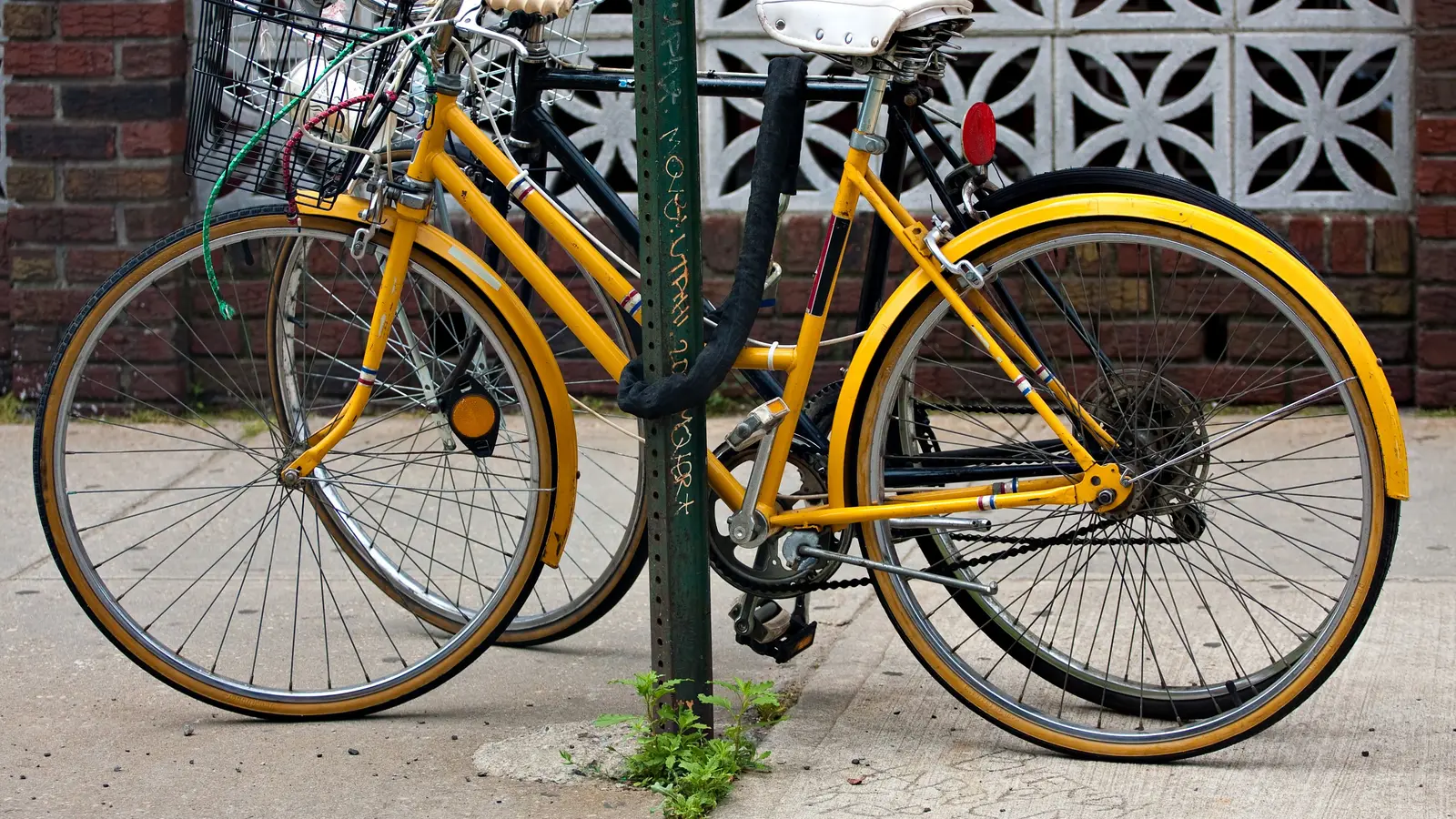
The Best Bike Locks: Five Picks for Every Rider
From angle-grinder-resistant U-locks to long chains and folding locks, here are the five best bike locks for UK riders, plus how to choose one.
Which bike lock is right for you?
The right lock depends on where your bike spends its time. If it lives on a city street or outside a train station all day, buy the toughest thing you can bear to carry: an angle-grinder-resistant U-lock such as the Litelok X1 or Hiplok D1000. If you commute and lock up briefly at each end, the Abus Granit X-Plus 540 balances security, weight and price nicely. If you need to reach round lampposts, railings or lock two bikes together, the Kryptonite Evolution Series 4 1090 chain is the flexible answer, while the Abus Bordo Granit X-Plus 6500 folding lock is the tidiest option to strap to the frame.
Whatever you choose, plan on a second, cheaper device — a cable or a small secondary lock — to secure a wheel that the main lock can't reach.
The best bike locks at a glance
| Lock | Litelok X1 | Hiplok D1000 | Abus Granit X-Plus 540 | Kryptonite Evolution 1090 |
|---|---|---|---|---|
| Style | Compact U-lock | Compact U-lock | Full-size U-lock | Integrated chain |
| Angle-grinder resistance | Yes — that's the design brief | Yes — that's the design brief | No — hardened steel only | No — hardened steel links |
| Best for | Everyday riding plus high-risk parking | Leaving in a rough city centre spot | Commuting and general-purpose locking | Awkward anchor points and multiple bikes |
| Carrying it | Frame bracket | Frame bracket or bag | Frame bracket included | Bag, or wrapped round the frame |
| Flexibility round anchors | Limited to what the shackle spans | Short span, so choose your stand | Fits most stands and racks | Wraps round almost anything |
| Price position | Premium | Premium | Mid to upper | Mid |
| Main drawback | Cost, and a snug fit on fat stands | Weight, and very little reach | Heavier than it looks | Bulk and paintwork scuffs |
Read down the columns and the trade-offs are obvious: the two grinder-resistant locks buy you time at a price, the Abus is the sensible all-rounder, and the chain wins on versatility while losing on bulk.
The five best bike locks
Best overall
Litelok X1
4.8A British-designed compact U-lock built around a composite-cored shackle rather than plain hardened steel, so it is intended to survive an angle-grinder attack that would cut through a conventional D-lock in seconds. It is short enough to keep leverage on the thief's side low, long enough to catch frame and rear wheel on most Sheffield stands, and it comes with a frame mount. For a bike that is left in public view every day, this is the pick that gives you the most time to hope someone intervenes.
Why we rate it
- Purpose-built to resist angle grinders, not just bolt croppers
- Lighter and easier to live with than a chain of comparable security
- Reputable British brand with spares and support available in the UK
Worth knowing
- One of the more expensive locks here
- The compact span can be fiddly on chunky stands
- Still not uncuttable — no lock is
Best for high-risk parking
Hiplok D1000
4.6Hiplok's premium compact U-lock follows the same anti-grinder logic as the Litelok, with a short shackle that leaves a thief very little room to work. The stubby shape is its strength: there is barely enough space for a cutting disc to get purchase, and the whole lock disappears into a backpack when you're riding. It is the one I'd choose for a bike parked repeatedly in the same busy, theft-prone spot, where the thief has time and knows the bike.
Why we rate it
- Very high security in a genuinely compact package
- Short shackle limits attack angles and leverage
- Tidy to carry off the bike when you're not using a mount
Worth knowing
- Expensive, and priced close to the top of the market
- The short span won't reach round thick posts or both wheels
- Noticeably heavier than a basic D-lock
Best everyday U-lock
Abus Granit X-Plus 540
4.5The dependable choice for riders who want serious security without paying grinder-proof prices. It's a chunky hardened-steel U-lock with a double-bolted shackle, sold with a frame bracket so it travels with the bike, and it's long enough to pass through the frame, a wheel and a stand in one go. Abus also sells matching keys and replacement-key services, which matters when you've got two or three of their locks on the household fleet.
Why we rate it
- Strong all-round security at a more reasonable price
- Bracket included, so no extra spend to carry it
- Long enough for frame, wheel and stand together
- Widely stocked in UK bike shops, so easy to replace if lost
Worth knowing
- No angle-grinder resistance — a determined thief will get through
- Heavier on the bike than a compact lock
- Brackets can rattle over rough tarmac
Best for awkward anchor points
Kryptonite Evolution Series 4 1090 Integrated Chain
4.4A hardened-steel chain of roughly 90 cm with the lock built into one end, so there's no separate padlock to fumble with in the rain. Chains are the answer when the street furniture doesn't cooperate: wrap it round a lamppost, through a railing, round a tree, or thread it through two bikes at once. It also lets you lock the frame and both wheels in a single pass, which no U-lock can do.
Why we rate it
- Flexible enough for almost any anchor point
- Long enough to secure the frame and both wheels
- Useful for locking several bikes or a bike plus a trailer
Worth knowing
- Heavy and bulky — you'll want a pannier or a frame wrap
- Loose chain can scuff paintwork if you're careless
- Slower to thread and lock than a U-lock
Best folding lock
Abus Bordo Granit X-Plus 6500
4.0A folding lock made of riveted hardened-steel bars that concertinas into a compact pack, which then clips to the frame's bottle-cage mounts. It bends round odd-shaped rails and thick posts that a rigid U-lock can't manage, and it stays silent on the bike instead of clanking. It's a clear step up from a cable lock, though the riveted joints are the weak point compared with a solid shackle — best for shorter stops and lower-risk locations.
Why we rate it
- Folds small and mounts securely to the frame
- Shapes round railings and irregular stands
- Quiet and rattle-free on the move
Worth knowing
- Hinged joints make it easier to attack than a solid U-lock
- Limited reach compared with a chain
- The mount takes up a bottle-cage position
How to choose a bike lock
Start with the Sold Secure rating. It's the UK benchmark you'll see on lock packaging and in insurance small print, running from Bronze through Silver and Gold to Diamond. Gold is a sensible floor for anything parked on a street; Diamond is what you want for an expensive bike in a city. Then check whether your insurer specifies a minimum rating — buying a superb lock that doesn't meet the policy wording is a waste of money.
Next, weigh three practical questions:
- How long is it left? Ten minutes outside a café is a different risk from ten hours at a station.
- Will you actually carry it? The best lock is the one that comes with you. A chain left at home protects nothing.
- Can you leave a heavy lock at the destination? If you lock up at the same workplace rack every day, a heavy chain can simply live there, and you carry a lighter lock for the journey.
- Resistance to bolt croppers
- 5.0/5
Look for a thick, double-bolted shackle or hardened chain links rather than a thin cable.
- Angle-grinder resistance
- 4.5/5
Only a handful of composite-shackle locks are built for this, and you pay a premium for it.
- Locking flexibility
- 4.0/5
Chains and folders reach awkward anchors; short U-locks are quicker but fussier.
- Weight and carrying
- 3.5/5
Security and weight travel together. Decide whether it rides on the frame or in a bag.
- Frame and paint protection
- 3.0/5
Chains and folders need a sleeve or careful wrapping to avoid chipped paint.
- Value for money
- 3.0/5
A cheap lock that fails costs you the bike. Spend once, buy well.
How to lock your bike properly
The strongest lock in the shop is useless if it's threaded through a front wheel that can be unbolted in seconds.
- Lock the frame first. Pass the lock through the frame and, if you can, the rear wheel, then round a fixed stand.
- Fill the space. Keep the shackle snug so a jack or a grinder has as little room as possible.
- Choose the anchor carefully. Proper cycle stands beat railings, signposts, wooden fences and anything a thief can lift the bike over or unbolt.
- Take the easy wins. Remove lights and quick-release parts, and use a cheap cable for a wheel your main lock can't reach.
- Record it. Photograph the bike and note the frame number, so a recovery is at least possible.
Our verdict
Bike lock FAQs
Is a D-lock better than a chain?
Not better, just different. A D-lock is quicker to apply and harder to attack with cutters, but only secures what fits inside the shackle. A chain is slower and heavier but reaches awkward anchors and can cover both wheels.
Are cable locks worth bothering with?
As a primary lock in a town or city, no — most cables can be cut with hand tools. They're useful as a secondary lock for a wheel, or for low-risk situations where the bike is always in view.
Will my insurance insist on a particular lock?
Many UK policies require a lock meeting a stated Sold Secure rating, plus proof of forcible entry and sometimes the original lock and keys. Check your own policy wording before buying, as requirements vary between insurers.
Should I leave a heavy lock at work?
If you lock up at the same rack every weekday, keeping a heavy chain there and carrying a lighter lock for the journey is a common and sensible arrangement — just make sure the lock left behind isn't the only one protecting the bike overnight.
How do I stop a wheel being stolen?
Get the main lock through the frame and at least one wheel where possible, and use a secondary cable or small lock for the wheel that's left out. Security skewers are another cheap deterrent.
Related articles
 Best bike helmets: 5 picks for road, commuting and valueShortlists
 The best bike phone mounts for road and gravel ridersShortlists
 Best Bike Pumps: 5 Picks for Home, Road and TrailShortlists
 Best bike shorts: five picks for comfort on every rideShortlists
 Best BMX Bikes for Street, Park and BeginnersShortlists
 Best foldable electric bikes for UK commutersShortlists
 Best gravel bikes: five picks for UK lanes and club runsShortlists
 Best mountain bike helmets: 5 picks for UK trail ridersShortlists