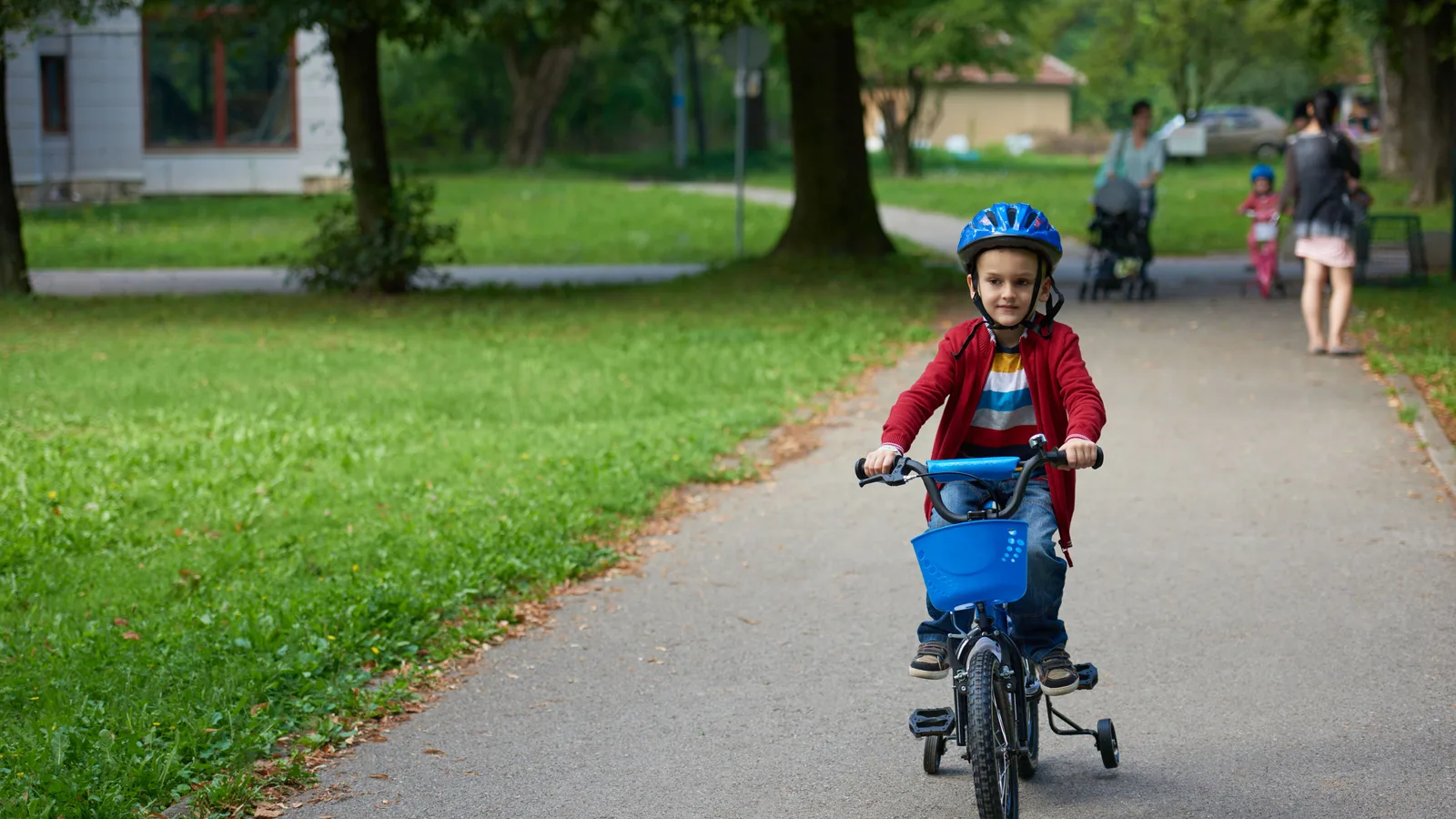
Best balance bikes for toddlers: five UK picks
Five balance bikes worth buying for UK toddlers, from the light woom 1 to the value Strider 12 Sport, plus how to choose size, tyres and brakes.
The quick answer
A first bike works only if the child can pick it up, steer it and stop it themselves. That makes weight and saddle height far more important than the badge on the frame — and it's why the right balance bike depends on your child, not on a single winner.
These five are the ones we'd point a UK parent towards, and each suits a slightly different rider:
- Best overall: woom 1 — light, grippy and adjustable enough to last.
- Best value: Strider 12 Sport — tough, puncture-proof and easy to keep running.
- Best lightweight: Hornit AIRO — the easiest of the five to handle and to carry.
- Best British buy: Frog Tadpole — a British brand with UK bike shop support.
- Best for rough-and-tumble: Puky LR M — heavy, but wonderfully planted.
| Balance bike | Best for | Weight | Tyres | Price band |
|---|---|---|---|---|
| woom 1 | Best overall | Light | Pneumatic | Premium |
| Strider 12 Sport | Best value | Light for a steel frame | Foam, puncture-proof | Value |
| Hornit AIRO | Best lightweight | Very light | Pneumatic | Mid-premium |
| Frog Tadpole | Best British buy | Light | Pneumatic | Mid-premium |
| Puky LR M | Best for rough-and-tumble | On the heavier side | Pneumatic | Mid |
Best overall: woom 1
Best overall
woom 1
4.5The woom 1 is the bike parents tend to recommend once they've tried a few. The aluminium frame is light enough for a small two-year-old to pick up and steer, the low step-through means no swinging a leg over the frame, and the air-filled tyres roll easily on tarmac while still finding grip on grass and gravel. The saddle and handlebars adjust over a generous range, so the same bike covers first scoots and proper gliding.
The standard woom 1 has no brake; the woom 1 Plus adds a rear handbrake for children who are ready to learn one. It costs more than a high-street bike, but wooms hold their value well second-hand, which softens the blow when your child moves on to pedals.
What we like
- Light aluminium frame a small child can handle and pick up
- Air tyres roll smoothly on tarmac and grip on grass and gravel
- Wide saddle and handlebar adjustment covers a lot of growing
- The woom 1 Plus version adds a rear handbrake
- Strong second-hand values when you sell it on
What to weigh up
- The priciest bike on this list
- No brake on the standard woom 1
- Not stocked in every bike shop, so trying one takes some effort
Best value: Strider 12 Sport
Best value
Strider 12 Sport
4.5The default first balance bike in a lot of UK homes, and for good reason. The foam tyres can't puncture, the steel frame survives being dropped on paving, and the long wheelbase feels steady the first time a child sits on it. Footrests on the frame give them somewhere to put their feet once they're gliding, and Strider includes a longer seatpost and handlebar in the box so the bike grows with your child.
The trade-off is weight and grip. It's heavier than an alloy bike of the same size, and foam tyres slide about on wet grass and muddy towpaths. For pavement, park paths and playgrounds, though, it's hard to beat for the money.
What we like
- Foam tyres that never puncture and need no pumping
- Built-in footrests help children lift their feet and glide
- Spare long seatpost and handlebar included for growth
- Spares are cheap and easy to find in the UK
- Stable, long-wheelbase feel from the first ride
What to weigh up
- Heavier than aluminium rivals to carry and to pick up
- Foam tyres cope badly with wet grass and mud
- No brake
Best lightweight: Hornit AIRO
Best lightweight
Hornit AIRO
4.5British brand Hornit built the AIRO around a very light frame, and that's the whole point: a lighter bike is easier for a toddler to balance, to steer and to pick up when they topple. A quick-release seat clamp makes it a two-second job to change saddle height between siblings or to raise it as your child grows, which matters if the bike is shared or handed down.
Air tyres give it grip and a smoother ride than a foam-tyred bike, and the low weight pays off on the nursery run or the walk home from the park when you end up carrying it. You pay a premium for that low weight, and it's a simple machine rather than a feature-packed one.
What we like
- One of the lightest balance bikes you can buy in the UK
- Quick-release seat clamp for fast height changes
- Air tyres give grip and comfort on uneven paths
- British brand with customer support on home soil
- Easy to carry one-handed when your child gives up halfway home
What to weigh up
- You pay a premium for low weight rather than for extras
- Less widely stocked than the big high-street names
Best British buy: Frog Tadpole
Best British buy
Frog Tadpole
4.5Frog Bikes is a British brand, and the Tadpole is its balance bike: an aluminium frame, air tyres and the sort of build quality that survives two or three children in the same family. Because Frog sells through UK bike shops, you can have the bike set up properly on the day you buy it and get it serviced or repaired years later without hunting for odd-sized parts online.
The Tadpole Plus version suits taller or older children who still want to glide rather than pedal. It's more than a basic high-street balance bike, but it's the one to choose if you'd rather buy once, look after it and pass it down the family.
What we like
- British brand with a network of UK bike shops behind it
- Aluminium frame and air tyres keep it light and grippy
- Built to be handed down through the family
- Tadpole Plus gives taller children a better fit
- Easy to service locally when something wears out
What to weigh up
- Costs more than a basic high-street balance bike
- The standard Tadpole is small for a tall four-year-old
Best for rough-and-tumble: Puky LR M
Best for rough-and-tumble
Puky LR M
4.0Puky is a German brand that turns up in a lot of UK nurseries and playgroups, and the LR M shows why: a steel frame, a low step-through and a very planted feel that suits children who throw themselves at everything. The saddle and handlebars adjust as your child grows, and it takes knocks and kerbs without complaint.
It isn't the bike you'll want to carry far — it's one of the heavier options here — but for a child who rides daily on paving and park paths and drops the bike constantly, that solidity is worth the trade.
What we like
- Very stable and planted, even for a wobbly first-timer
- Robust steel frame that shrugs off drops and kerbs
- Adjustable saddle and handlebars to follow growth
- Widely available in the UK and easy to find in playgroups
What to weigh up
- Noticeably heavier to carry than an alloy bike
- The extra weight is harder for a small rider to pick up
How to choose a balance bike
Start with weight. A balance bike only works if your child can hold it up and pick it up. Every extra kilo is weight they have to manage, so a light frame and light wheels buy confidence. It also matters to you at the end of a ride when you're carrying the bike and the child.
Then look at the saddle range, not the age on the box. Brands quote ages loosely. What matters is the lowest saddle height: your child should be able to sit on it with both feet flat on the ground. A wide adjustment range means the bike will still fit in 18 months' time.
Wheel size. 10in wheels suit the smallest riders; 12in wheels roll over kerbs and uneven path surfaces more easily and are what most of the bikes here use.
Tyres. Foam tyres never puncture and need no maintenance, which is perfect for paving, parks and playgrounds. Air tyres grip better on grass, gravel and wet paths and give a plusher ride, but they need pumping and can puncture.
Brakes. Most balance bikes have none, and children stop with their feet. A rear handbrake is worth having if you want them to arrive at a pedal bike already knowing how a brake lever feels.
Steering limiters and footrests. A limiter stops the bars spinning round and the front wheel jack-knifing in a fall. Footrests give a child somewhere to put their feet once they're gliding, which is the move that leads to pedalling.
Frame shape. A low step-through frame is easier to get on and off and hurts less when the bike lands on them.
- Weight
- 5.0/5
The single biggest factor in whether a small child can control the bike on their own.
- Saddle height range
- 5.0/5
Buy for the child you have now, but a wide range keeps the bike in use for longer.
- Tyres
- 4.0/5
Foam for paving and playgrounds, air for grass, gravel and wet paths.
- Brake
- 3.0/5
Not needed to learn balance, but useful before the move to a pedal bike.
- Spares and resale
- 3.0/5
Brands with UK spares and strong second-hand demand cost less over the years.
Sizing and setting the bike up
Two measurements do most of the work: your child's inside leg and the bike's lowest saddle height. Set the saddle so they can sit with both feet flat on the floor and a slight bend in the knee — not on tiptoe, and not so low that their knees come up around their ears when they push.
Handlebars should be within easy reach while seated, without stretching or hunching. If the bike has a steering limiter, leave it on while they're learning; it stops the front wheel turning too far and dumping them on the ground. Then take the stabilisers off your expectations too — most children spend a few weeks walking the bike along before they ever sit down and glide.
- Lowest saddle height
- The setting that matters most: your child should reach the ground with both feet flat.
- Wheel size
- 10in for the smallest riders; 12in is the usual choice from around two and rolls better on uneven ground.
- Handlebar height
- Within easy reach while seated, with no stretching or hunching.
- Footrest
- A flat rest on the frame gives children somewhere to put their feet once they're gliding.
- What to take to a test ride
- Their shoes and their helmet, so the saddle can be set up before they ride.
Balance bike or stabilisers?
Stabilisers hold the bike upright, so a child learns to pedal and steer but never has to find their own balance. A balance bike reverses that: they learn balance and steering first, with their feet as the brakes, and pedalling gets added later.
In practice most children who glide confidently on a balance bike move onto a pedal bike without stabilisers, often within a session or two — the hard part, balancing, is already done. The catch is that a balance bike doesn't teach pedalling, so some children need a few goes to get the hang of turning the cranks. Plenty of UK parents run both: a balance bike from around two, then a pedal bike at four or five when their inside leg fits one.
The bottom line
Frequently asked questions about balance bikes
What age can a child start using a balance bike?
Most children are ready somewhere between 18 months and two and a half years, once they can walk confidently and straddle the bike with both feet flat on the ground. The saddle height matters more than the birthday: if the lowest setting sits above their inside leg, it's worth waiting a few months.
Do balance bikes need a brake?
Not to learn balancing — children stop with their feet, and that teaches them how much grip they have. A rear handbrake is worth having if you'd like them to arrive at a pedal bike already familiar with a brake lever, and a few models offer one as a second version or an upgrade.
Foam or air tyres — which should I choose?
Foam tyres never go flat and need no maintenance, which suits paving, parks and playgrounds. Air tyres give more grip and comfort on grass, gravel and wet paths, but they need pumping and can puncture, so carry a pump if you ride off-road often.
How long will a balance bike last one child?
A bike with a wide saddle and handlebar range usually covers around two years of growth, from first scooting to confident gliding. After that most children are ready for pedals — which is why resale value and a steady supply of spare seatposts matter more than they seem to at the start.
Is a second-hand balance bike a good buy?
Usually yes. Check the frame and fork for cracks or deep rust, spin the wheels and feel for play in the bearings, and make sure the seatpost and clamp are included. Bald or flat-spotted foam tyres are the usual reason a cheap second-hand bike rides badly.
Related articles
 Best bike helmets: 5 picks for road, commuting and valueShortlists
 The best bike phone mounts for road and gravel ridersShortlists
 Best Bike Pumps: 5 Picks for Home, Road and TrailShortlists
 Best bike shorts: five picks for comfort on every rideShortlists
 Best BMX Bikes for Street, Park and BeginnersShortlists
 Best foldable electric bikes for UK commutersShortlists
 Best gravel bikes: five picks for UK lanes and club runsShortlists
 Best mountain bike helmets: 5 picks for UK trail ridersShortlists