Gym Bike vs Treadmill: Which Is Right for Your Home?
Choosing between a gym bike and a treadmill? We compare impact, space, noise, training goals and who each machine suits in a UK home.
The short answer: the gym bike wins for most homes
If you are buying one cardio machine for a typical UK home, the gym bike is the overall winner. It gives you useful cardiovascular training with far less impact than running, it is usually easier to fit into a spare room, and it is kinder to neighbours in a flat. The treadmill is the better machine only when running or brisk walking is the training you actually want to do.
Gym bike vs treadmill at a glance
The differences that matter most are not the ones on the spec sheet. They are the ones you notice every time you use the machine: how it feels on your joints, how much floor space it takes, and how much noise it sends through the house.
| What matters | gym bike | treadmill |
|---|---|---|
| Joint impact | Low: your feet stay on the pedals, so there is no repeated foot strike. | Higher: walking and running involve repeated impact through the legs. |
| Space and clearance | Often the smaller footprint; check saddle and handlebar adjustment. | Longer deck and belt; needs clear space in front and behind. |
| Noise and vibration | Quieter in use; little floor vibration compared with running. | Motor hum and footfall; vibration can carry through floors. |
| Main cardio effect | Steady leg endurance and intervals with controlled resistance. | Weight-bearing walking or running fitness. |
| Running-specific training | Cannot copy running gait or train you for race pace. | Directly trains walking and running pace, stride and hill effort. |
| Skill and confidence | Very easy to start: sit, pedal and adjust resistance. | Needs belt-speed awareness and balance, especially at speed. |
| Upper-body involvement | Minimal; your hands mostly rest on the bars. | Your arms swing, but your legs still do most of the work. |
| Best room in a UK home | Spare room, flat or garage where sound travels. | Dedicated room or garage with space and sound insulation. |
Impact and comfort: the gym bike wins
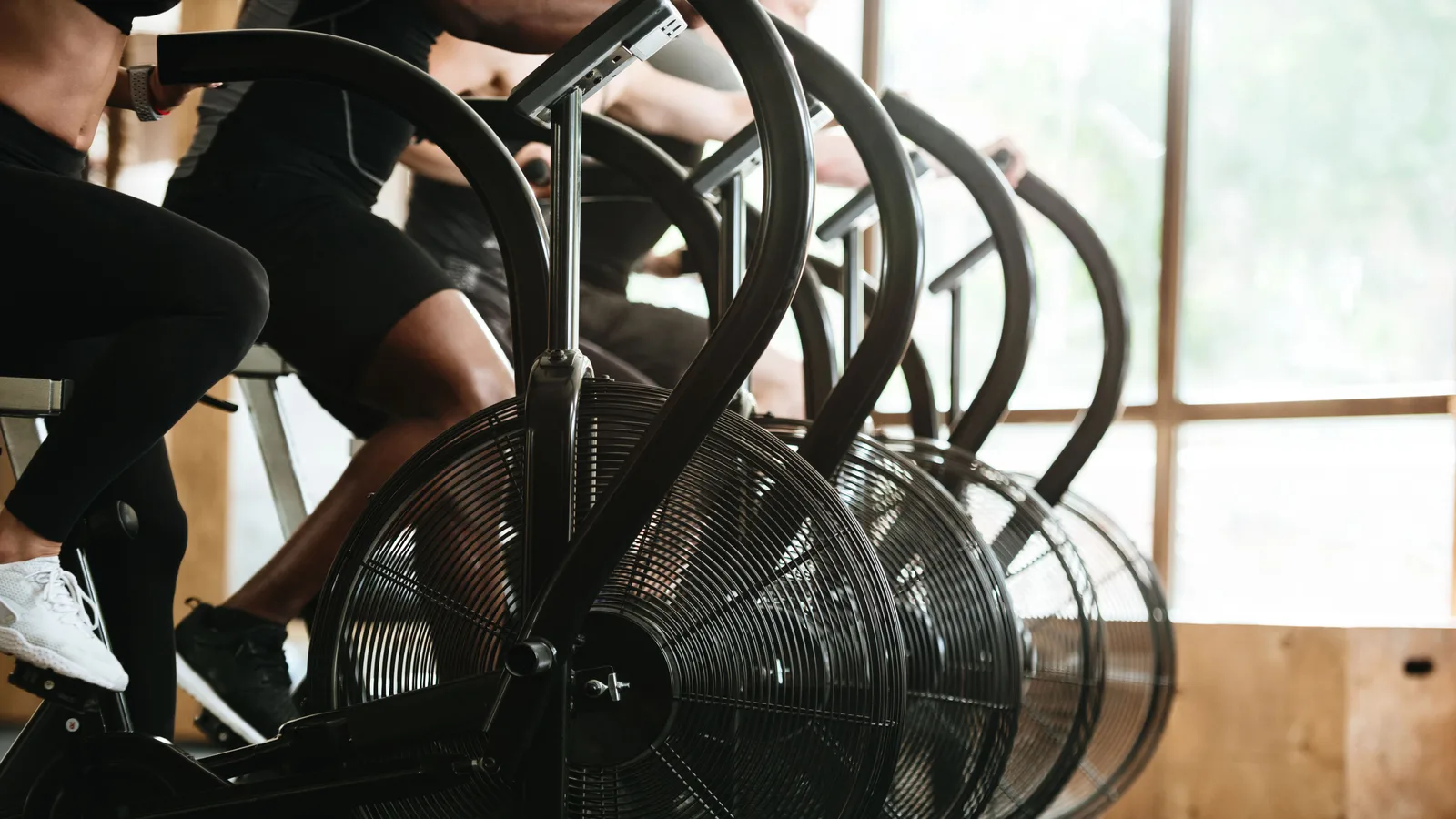
The gym bike’s biggest advantage is that it removes the repeated foot strike of walking and running. You can still work hard — high resistance, fast cadence, long intervals — but the load goes through the pedals rather than a jarring landing. That makes it easier to use if your knees, hips or back prefer low-impact exercise, or if you are returning to training after a break.
The trade-off is saddle comfort. A poorly fitting bike can be uncomfortable, so check that the seat and handlebars adjust enough for your height and riding position. Padded shorts help, and so does getting off to adjust rather than putting up with a bad setup.
Space, noise and flat living: gym bike wins
A treadmill needs a long deck and clear space in front and behind it, and running on it sends vibration through the floor. In a first-floor flat or a terraced house with thin floors, that is the difference between a machine you use and one you feel guilty about. A gym bike is not silent, and a heavy spin bike still needs a stable floor, but it usually takes less room and creates less footfall noise.
Measure the assembled footprint, not the folded size, and check the ceiling height you need when you are on the machine. Also think about how you will get it up the stairs: both machines are awkward to move once built.
Running and walking goals: treadmill wins
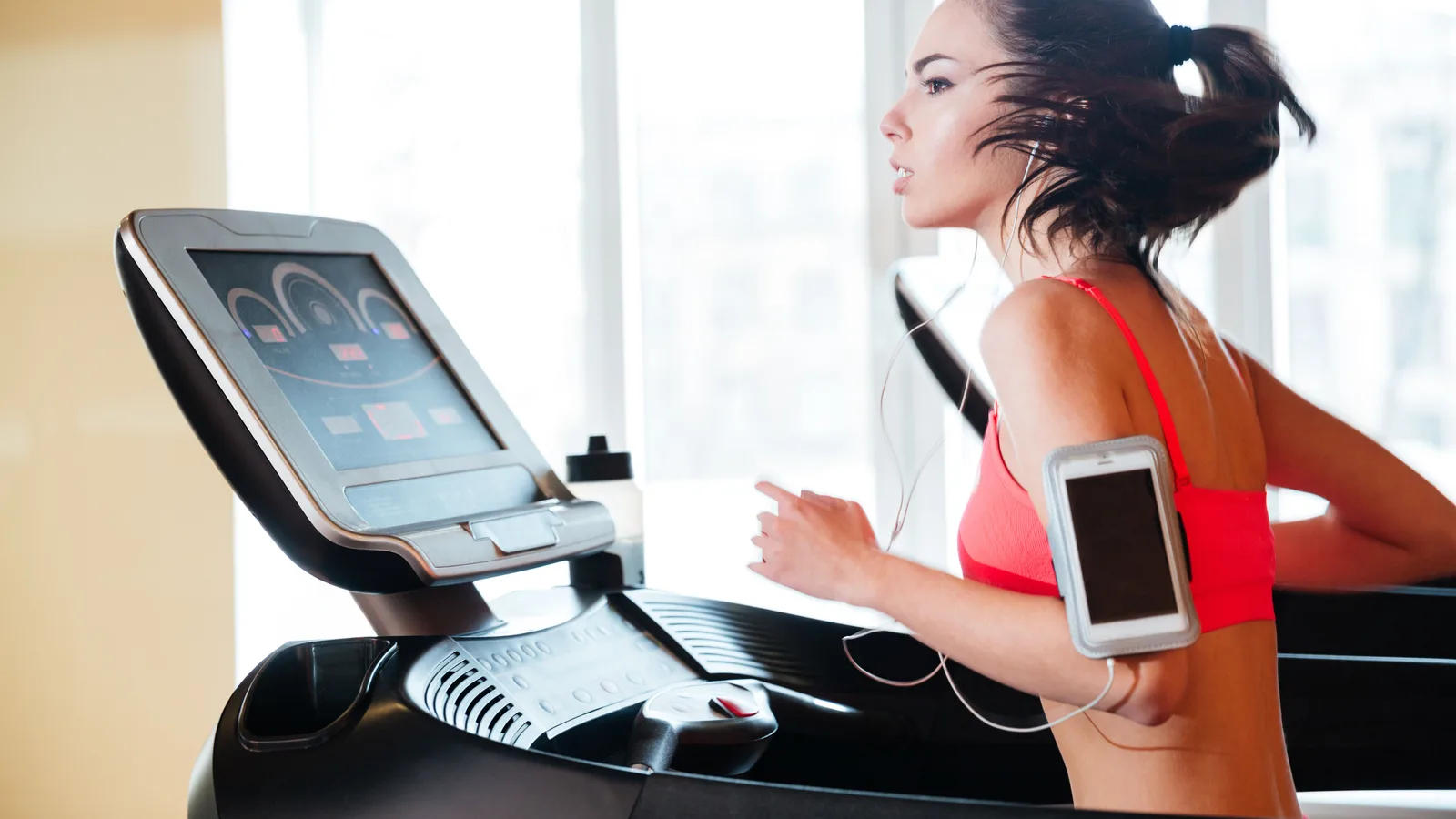
If your goal is to run a 5K, train for a half marathon or simply walk more, the treadmill is the more specific tool. It trains the movement you are trying to improve: foot strike, stride, pace and incline. You can set a steady pace and practise hills without worrying about weather or traffic.
A gym bike can support your running with low-impact cross-training, but it cannot replace running-specific sessions. For runners, the treadmill is not a compromise; it is the right machine for the job.
Cycling and general fitness: gym bike wins
For cyclists, a gym bike is the more useful indoor machine. You can hold a cadence, work in zones and repeat intervals without the coordination demands of a treadmill. It also mirrors the posture and leg action of riding, which makes it easier to build endurance for club rides when the weather is poor.
For general fitness, the same points apply: most people can get a worthwhile session on a gym bike with less skill and less recovery cost than running. That matters if you want to train often rather than occasionally.
Cost, upkeep and the reality of home use
Both machines vary enormously in build and features, so there is no single price story. What matters is what you get for the floor space and what you will have to look after. A treadmill has a motor, belt, deck and rollers; a gym bike has fewer powered parts, though a spin bike still has a flywheel and resistance system. On upkeep, the gym bike has the edge because there is less machinery to go wrong.
The most expensive mistake is buying a machine that is awkward to set up, noisy or uncomfortable enough that you stop using it. Before you buy, check the assembled dimensions, the maximum user weight, the warranty and whether the seat and handlebars adjust enough for everyone who will use it.
Who should choose a gym bike
- You want low-impact cardio that is easier on knees, hips and back.
- You live in a flat or spare room and need to keep noise and footprint down.
- You cycle and want indoor endurance or interval sessions when the weather is poor.
- You want a machine that is quick to start and hard to get wrong.
If you recognise yourself in those points, the gym bike is the straightforward choice. It is not a punishment machine; the best one is the one you can adjust comfortably and use without dreading the setup.
Who should choose a treadmill
- Your main goal is running, race training or brisk walking.
- You need weight-bearing cardio rather than seated work.
- You have a dedicated room or garage where noise and vibration are less of an issue.
- You want to practise pace and incline in a controlled setting.
The treadmill is the more specialised purchase, but that is not a criticism. If running is the thing you care about, buying a gym bike instead is a false economy.
Final verdict
The gym bike is the better all-round choice for most homes. It is not the most running-specific machine, but it is the one more people will use consistently in a UK flat or spare room. Choose the treadmill if running or walking is the goal and you can give it the space and sound insulation it needs. If you are a cyclist buying one indoor machine for winter training, the gym bike is the clear pick.
Common questions
Is a gym bike or treadmill better for weight loss?
Neither is automatically better. Weight loss depends on your overall energy balance and on how often you train. The better choice is the machine you will use consistently; the gym bike is lower impact and easier to keep in a flat, while the treadmill makes walking and running easier to do indoors.
Can a gym bike replace running outdoors?
For general fitness and cross-training, yes. For running-specific fitness, no: cycling does not train the impact and stride pattern of running. If you are preparing for a race, keep running sessions and use the bike as recovery or extra aerobic work.
Do I need an incline treadmill?
Not for basic walking or running. Incline is useful if you want hill practice, more variety or walking workouts that feel harder without more speed. It is a nice feature rather than an essential one for most home users.
What is the best machine for a small flat?
A gym bike is usually the easier fit because it takes less length than a treadmill and creates less footfall noise. Check the assembled dimensions, the weight and the ceiling height before buying, and use a mat if you are on an upper floor.